Sidewalk Snow and Ice Removal in Prince George’s County

With the first snowfall of the year, Prince George’s County’s Department of Permitting, Inspections and Enforcement (DPIE) wanted to make citizens and business proprietors aware that they are responsible for removal of snow and ice from sidewalks abutting their properties. Per Prince George’s County Code, Section 23-150, it is the responsibility of the owner or lessor of a residential dwelling or commercial property to remove snow and ice from an abutting sidewalk within 48 hours after snow has fallen or ice has formed as a result of inclement weather.

If possible, residents and business proprietors are encouraged to remove snow or treat ice from an abutting sidewalk prior to the 48 hours to alleviate residual buildup on the sidewalk.

County inspectors will rotate through various areas of Prince George’s County to identify trouble spots that could create dangerous conditions for walkers of all ages. If trouble spots are identified, inspectors will leave a door hanger to “remind residents and business proprietors” to remove the snow and ice from abutting sidewalks.

If a door hanger is left, an inspector will return to the site the next day. If the sidewalk has not been cleared by that time, a violation notice will be left, which carries with it a $100 fine. Thereafter, the site will be re-inspected every 24 hours to ensure that it has been cleared. If it has not, subsequent violation notices will be issued, each of which carries a separate $100 fine.

As in all inclement weather conditions, if you know of a neighbor who is elderly or unable to shovel snow or remove ice from areas abutting their properties, please do the “neighborly” thing and try to help him or her. Local middle and high school students also could be contacted to assist, as they can earn community services hours required for graduation.

For more information, contact:
Susan D. Hubbard, Public Information Officer, Department of Permitting, Inspections and Enforcement, 9400 Peppercorn Place, Suite 500, Largo, Maryland 20774, 301.636.2020, sdhubbard@co.pg.md.us
Posted in Prince George's County News, Public Safety | Leave a comment

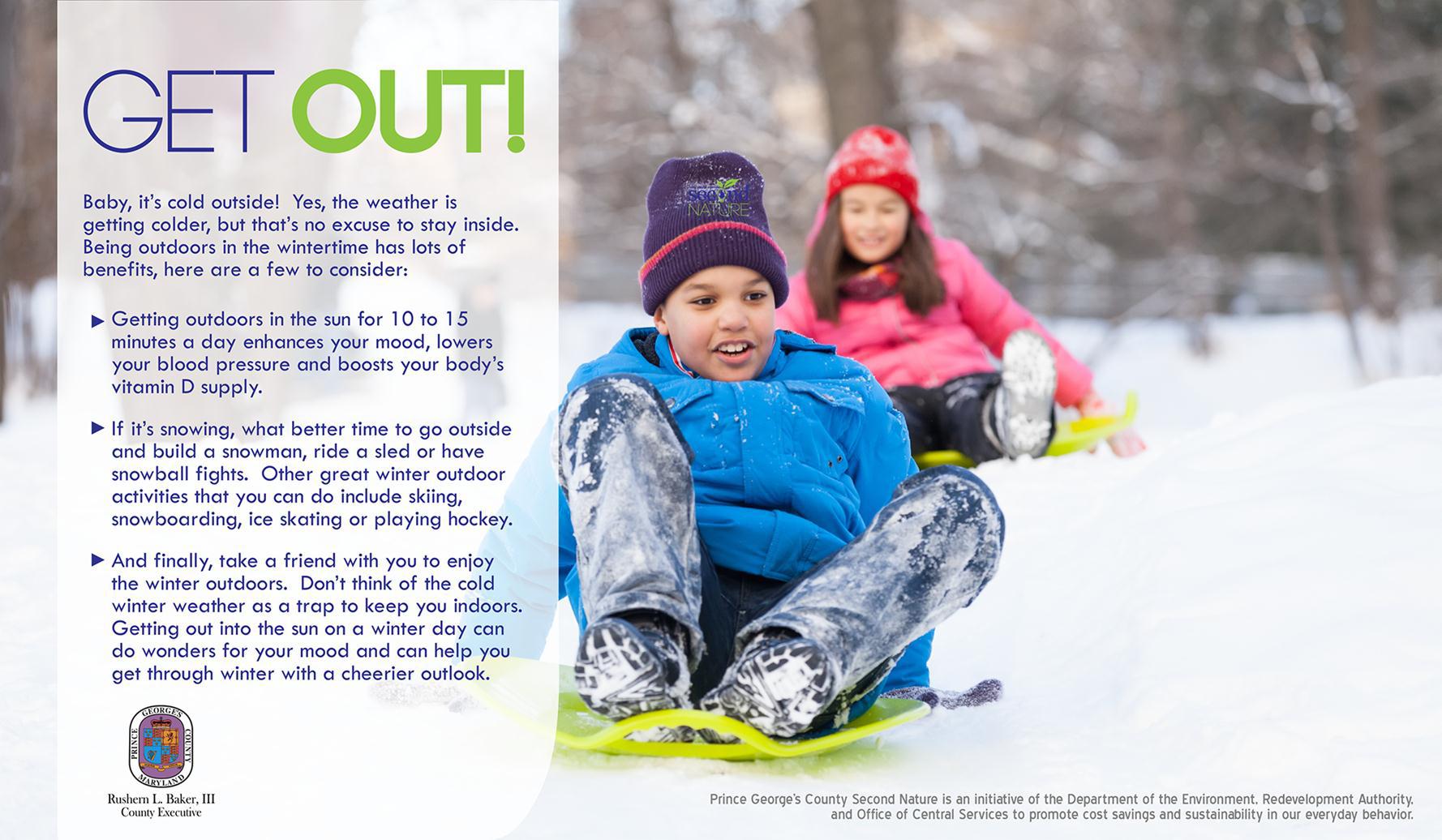
Prince George’s County Tuesday Tip: Get Out!

Get outside

Posted in Prince George's County News | Leave a comment

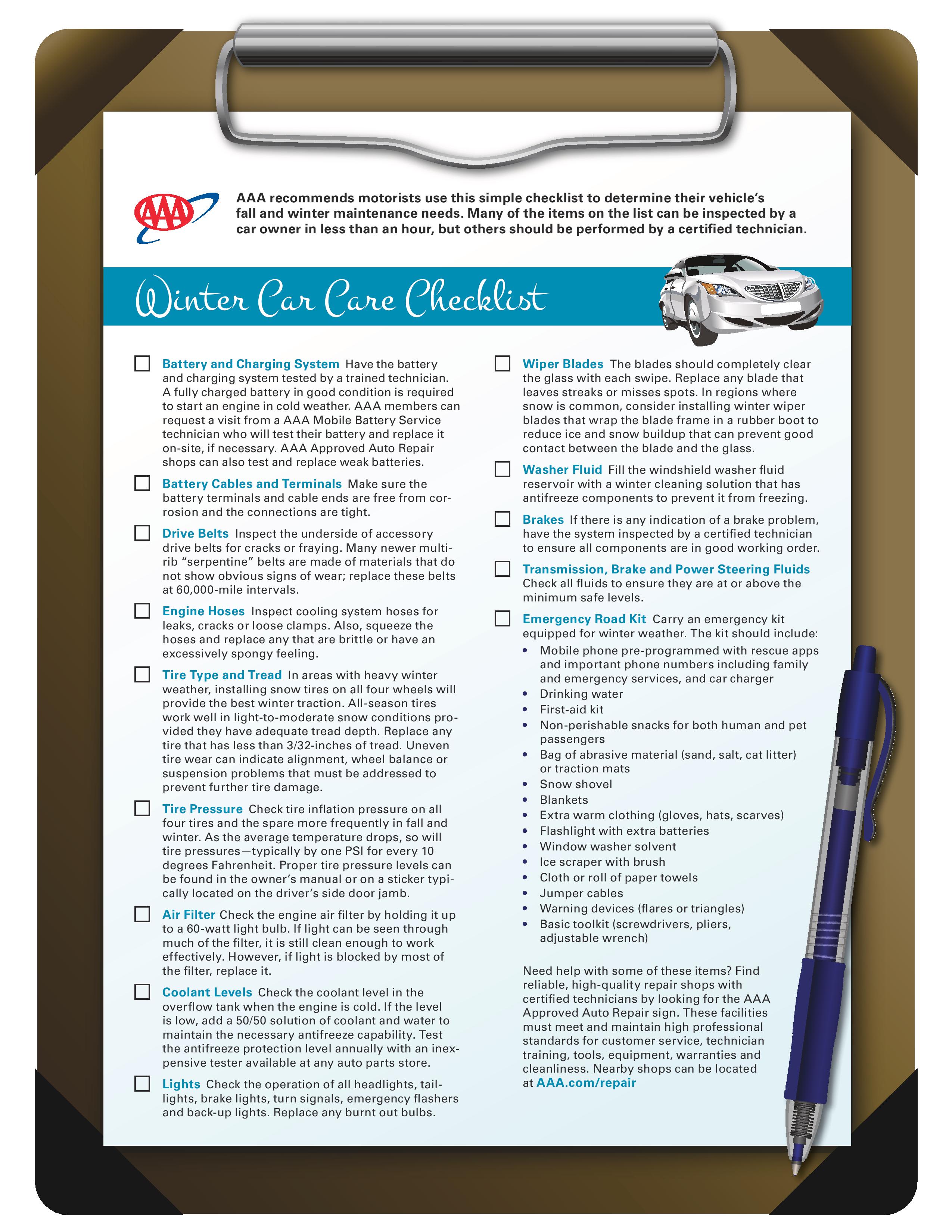
AAA-Mid Atlantic offers tips for navigating the snow

winter-car-care-checklist1-page-001

  • Prepare Your Vehicle for Use in Ice and Snow.Be sure your vehicle is ready for winter driving, even with only small amounts of snow being predicted. All weather or winter radial tires with excellent tread are necessary. Additionally, excellent windshield wipers with a full reservoir of washer fluid are essential for visibility.AAA’s Winter Car Care Checklist can help determine a vehicle’s winter maintenance needs. Many of the items on the list can be inspected by a car owner in less than an hour, but others should be performed by a certified technician.
  • Prepare Your Vehicle for the Very Cold Weather.With temps predicted to fall into the 20s overnight, motorists need to make sure they have adequate levels of antifreeze, a strong battery, and de-icing solution that can help with windows and locks. Inadequate anti-freeze can cause engine damage that will run into the thousands of dollars to repair. Emergency road service calls to AAA, especially for dead batteries and lockouts, always rise sharply when temperatures plummet.
  • Emergency Road Kit.  AAA Mid-Atlantic urges motorists to place and keep a winter weather kit in their car. Winter weather driving kits should include: a blanket, ice scraper, flares/reflective triangles, flashlight with extra batteries, jumper cables, bag of abrasive material such as cat litter, shovel, cloth/paper towels, and a fully charged cell phone. Check tires, wiper blades and car batteries before hitting the road.
  • De-Icing a Car.  Keep an extra ice scraper in your home should your ice scraper become frozen in the vehicle overnight. De-icing fluid should also be kept indoors should your door locks become frozen. Here is a link to a video presentation of AAA’s tips for properly removing snow from your vehicle. Removing snow and ice from your car before leaving home improves visibility and makes your car lighter and more responsive.
  • When to Drive.  If conditions are icy, AAA Mid-Atlantic is advising motorists to stay off the roads until road crews have treated the roads for ice and then not until conditions are favorable for the commute. Nearly one-quarter of weather-related vehicle crashes occur on snowy, slushy or icy pavement, resulting in more than 1,300 deaths and 116,800 people injured annually, according to theFederal Highway Administration.
  • Do Not Use Cruise Control. Avoid Tailgating. Normal following distances of three to four seconds for dry pavement should be increased to eight to 10 seconds when driving on icy surfaces. This extra time will allow for extra braking distance should a sudden stop become necessary. If driving on a four-lane highway, stay in the clearest lane; avoid changing lanes and driving over built-up snow. Do not use cruise control when driving on any slippery surface. Not using cruise control will allow you to respond instantly when you lift your foot off the accelerator.
  • Know When to Brake and When to Steer.   Some driving situations require abrupt action to avoid a crash or collision and in winter conditions the decision to steer or brake can have very different outcomes. When traveling over 25 MPH, AAA recommends steering over braking to avoid a collision in wintry conditions, as less distance is required to steer around an object than to brake to a stop. In slick conditions, sudden braking can lead to loss of vehicle control. However, sometimes steering is not an option. Braking on slippery surfaces requires you to look further head and increased following and stopping distances. Plan stopping distances as early as possible and always look 20 to 30 seconds ahead of your vehicle to ensure you have time and space to stop safely. Shaded spots, bridges, overpasses and intersections are areas where ice is likely to form first and will be the most slippery. It is important to adjust your braking habits as road conditions change.
  • Stay in Control Through a Skid. Even careful drivers can experience skids. When a vehicle begins to skid, it’s important to not panic. Continue to look and steer in the direction the car needs to go. Avoid slamming on the brakes as this will further upset the vehicle’s balance and make it harder to control.
  • Drive Distraction-Free.  It is also important when driving in winter conditions to drive distraction-free and in the right frame of mind. The AAA Foundation for Traffic Safety found that looking away from the road for just two seconds doubles your risk of being in a crash. AAA recommends if you are with a passenger, enlist the passenger’s help to carry out activities that would otherwise distract you from driving safely.
Posted in Local News, Prince George's County News | Leave a comment